Thank you, Anna!
We have received your request. We will be in touch to discuss the details.
- Type
- Contact
- Topic
- Contact forms
Explore the form builder →
Contact & service request form builder
Collect enquiries, service requests and inspection requests. Your customer completes a form and receives an email. Your team has the details it needs to follow up in CrewTango.
No account or app installation needed for your customers.
Tell us what you need.
Explore the whole workflow
Choose an example and explore both sides of a request: the customer experience and your team’s workflow.
* Required field
Details stay in this demonstration only.
Thank you, Anna!
We have received your request. We will be in touch to discuss the details.
A useful starting point
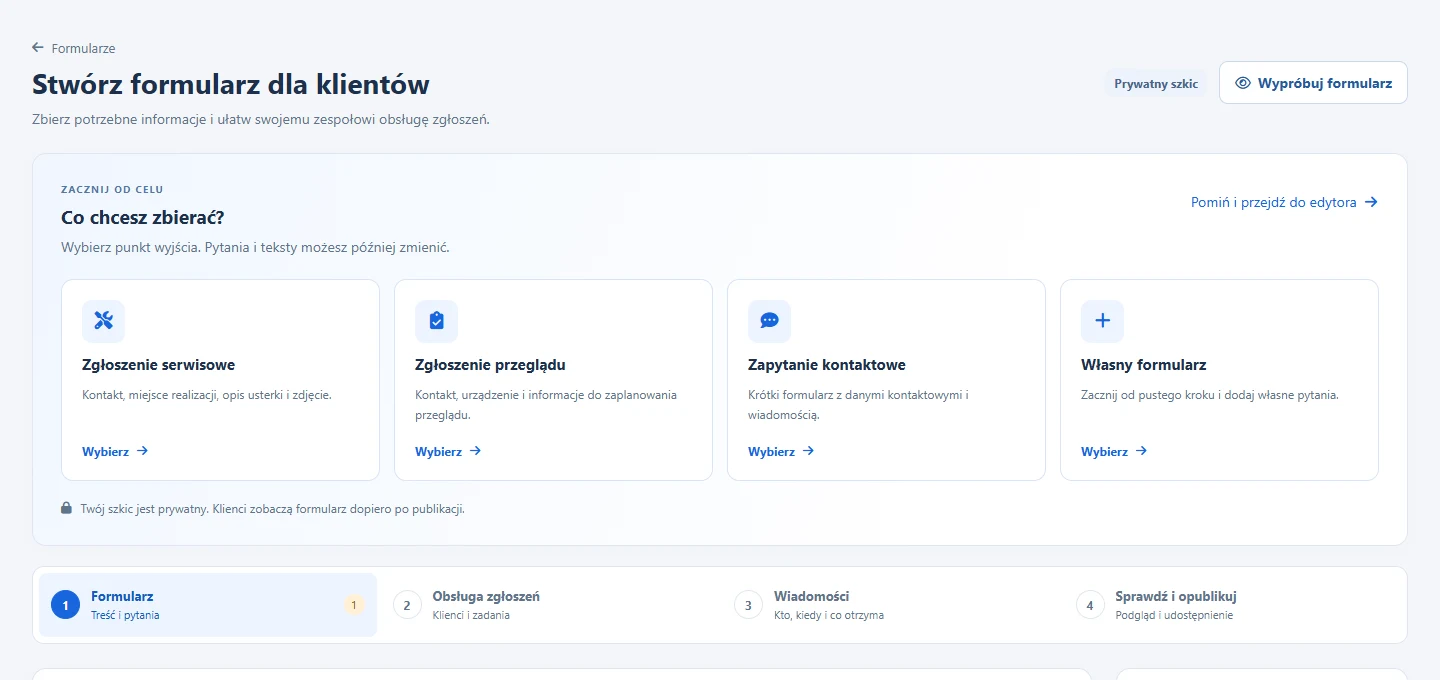
Use a template to get started, or begin with a blank form and build your own set of questions.
A question about your offer, a demo or a partnership. Six short fields and a way to reply.
Try this exampleContact details, equipment, a description of the fault and a photo. Get the context before the first call.
Try this exampleEquipment and a preferred date. Your team reviews the request and arranges the visit.
Try this exampleHave another workflow in mind? Choose the blank template and add the fields, information and consents you need.
Build it in CrewTango
The editor takes you from form content through request handling and messages to publication.

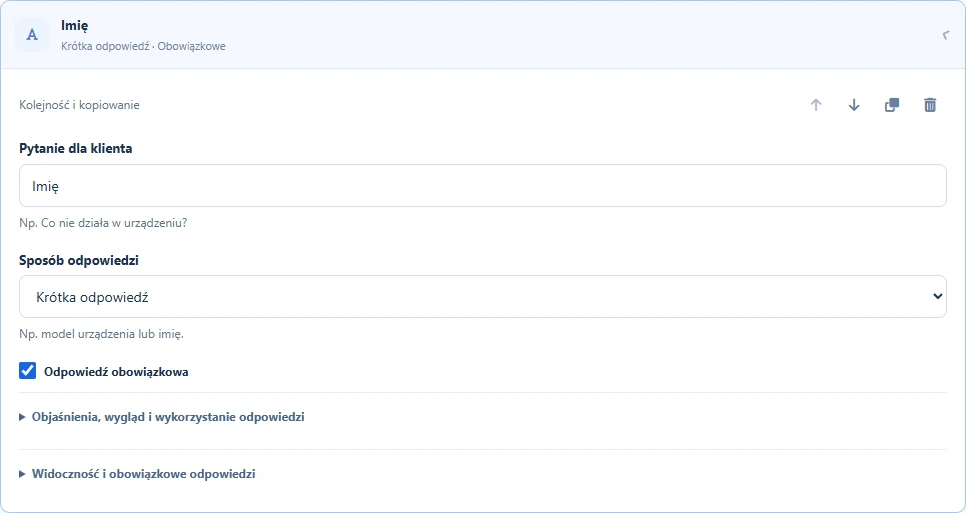
Add and duplicate questions, reorder them and move them between steps. Work in progress stays private.
Check mobile and desktop layouts, required fields, the thank-you screen and messages. Previewing creates no requests or emails.
A readiness checklist highlights missing settings. Saving a draft leaves the form currently on your website unchanged.

Simple when possible. Detailed when needed.
A first enquiry only needs a few fields. For service, show a fault description and a photo. For an inspection, ask about the equipment and a preferred date. Questions can appear or become required based on the request type.
One short screen or a form with 1–5 steps and a progress indicator.
Illustration of questions shown by request type.
Keep both sides informed
Tailor the subject and message to the request type. Include a name, company and request reference. Choose who on your team is notified and when.
Thank you, Anna!
We have received your enquiry about contact forms. We will be in touch to arrange your demo.
DEMO-1042Contact form · DEMO-1042
Contact details and answers are available with the request. Open it in the dashboard, review the customer and decide on the next step.
View a sample request →Example messages. The promotional link is optional. Submission confirmation and email address verification are separate settings.
From enquiry to action
Review requests by form and status. Answers, attachments and history stay together. Link the customer and prepare a task using the details you have collected.
A team member creates the task after reviewing the request. A preferred date does not reserve an appointment.
Where your customers are
A published form has its own link and embed code. Place it in your page content or in a modal opened by a button. The same form adapts to a phone screen.
Good to know
No. Customers complete a public form in a browser on a computer or phone. No app installation is required.
Yes, if your website lets you add embed code. Publication provides an embed code and a public link. Specify the allowed website origins in the form settings.
No. Email verification is configurable. You can also send a submission confirmation without a verification step. New templates enable verification by default; choose the settings that fit your workflow before publishing.
JPG, PNG and WebP images, and PDFs. A request supports up to 5 files, with a maximum of 10 MB each; your company’s limit may be lower. Add an attachment field only where it is useful.
Yes, from 1 to 5 steps. You can show progress, require answers and display questions based on the request type.
No. You work on a private draft that saves as you edit. Customers see the new version after you publish it.
A team member reviews the request, links the customer and can create a task using prefilled details. They can check and adjust the information before creating the task.
Choose the public form language and write your questions, choices and messages in that language. A bilingual website can embed two separately configured forms. The editor shown in the illustrations has a Polish interface.
During a demo, we will agree on the module scope, request workflow and activation for your company. Start with one form and one specific workflow.
Your company’s first form
We will show you the form, customer confirmation and request handling using your own workflow as an example.