USE CASE

Compare work across locations in one report

When some people work remotely on computers and others in the field, a consistent overview is essential. CrewTango connects time, tasks, schedules and reports so managers see facts and teams have clear rules.

Office + remote work + field work Kanban and schedules Reports and summaries
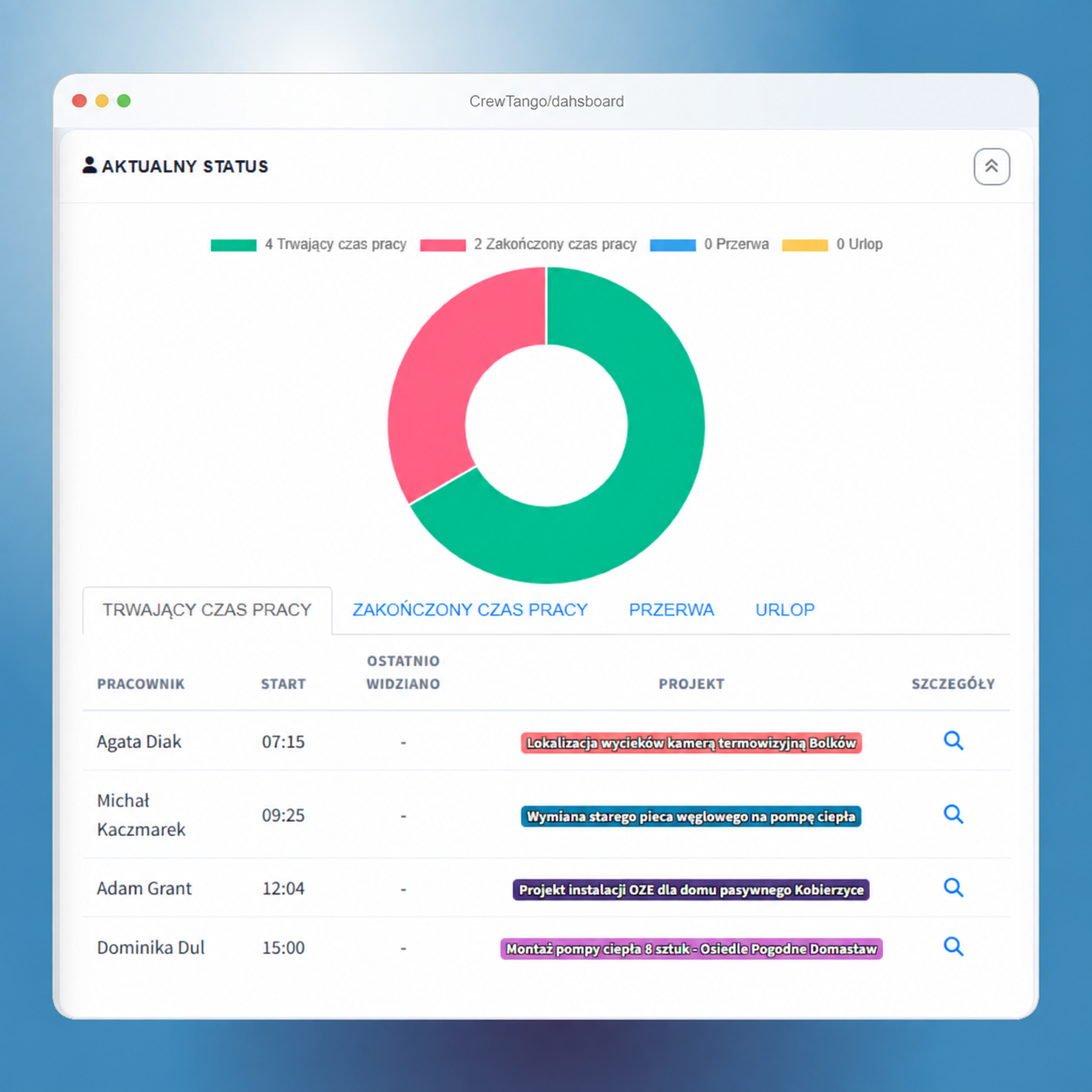
CrewTango dashboard for a distributed team
THE CHALLENGE

Distributed work takes extra time without a shared process

Without a shared tool, updates, calls, guesswork and pay disputes create confusion.

Status updates take time away from work

Too many update requests and too little data.

Inconsistent time records

Time from different workplaces does not form one summary.

Tasks in chats

Priorities and ownership get lost across threads.

Planning shifts and availability

Hybrid and field work without a schedule means constant rearrangement.

Hard-to-spot blockers

Problems appear only after the deadline.

Pay and allowances lead to disputes

There is no clear breakdown of time and rules.

WHY IT WORKS

Visible plans and recorded time help the team focus on priorities

When tasks, schedules and work sessions are visible together, managers can see the day without assembling messages and spreadsheets.

  • Fewer interruptions and check-in meetings
  • Better weekly planning
  • Clear task status and priorities
ONE VIEW OF WORK

Phones and computers feed one manager dashboard

Everyone uses the tool suited to their work. Managers receive a shared summary without combining records manually.

Mobile app

Time, tasks and files from the field.

Desktop app

Working time and the agreed additional information.

Manager dashboard in the browser

Connects the whole team's time, schedules, tasks, projects and reports.

  • one view for office, home and field work
  • data scope based on role
  • current summary without copying records
TASKS AND KANBAN

Work flows when priorities are visible

Each task has assignees and a deadline, making communication clearer.

Example columns: To do → In progress → Review → Done. See the current stage and people responsible.

Context stays with the task.

For mixed teams, Kanban gives office and field staff a shared view of work.

PLANNING

Schedules that keep hybrid and field work organised

When people work in the office, remotely and in the field, scheduling keeps plans clear. See staffing, roles and locations, then compare actual work with recorded time.

  • Multiple schedules for teams and locations
  • Roles and locations (optional)
  • Planned vs actual: late arrivals and absences
Calendar view
Week
Office
Mon–Fri
Remote
Mon–Thu
Field
Tue–Sat
Sample staffing: 2 coordinators, 6 field technicians and 5 remote specialists.
SHARED SUMMARY

Reports connect time, costs, projects and tasks

Compare selected periods and review the whole team's work, wherever they work.

Time

work sessions in the selected period

Cost

rates and pay components

Tasks

stage, deadline and ownership

Project

time linked to work context

Working time (14 days)
Task completion
Planned In progress Done

Want to see this with your team?

Create an account or book a walkthrough of an example setup for hybrid and field teams.

COMMUNICATION

Task status and history keep agreements clear

Check priorities, owners, statuses, comments and attachments together instead of asking across channels.

Moving a task between board stages
Comments and notes
Photos and attachments
RULES

Clear rules build trust in distributed teams

Define data scope, roles and visibility transparently. Enable the data sources your process needs.

FAQ

Distributed teams

Yes. Both groups' records feed one shared view of work.

No. These features are optional and should be enabled when the process calls for them.

To a large extent, yes: it provides a shared view of work in progress and priorities.

Yes. Schedules help organise teams, roles and locations.

Yes. Shared summaries connect time, projects, tasks and costs across workplaces.

Make distributed work a predictable process

Start with tasks and time tracking, then adapt the rest to roles and teams.